
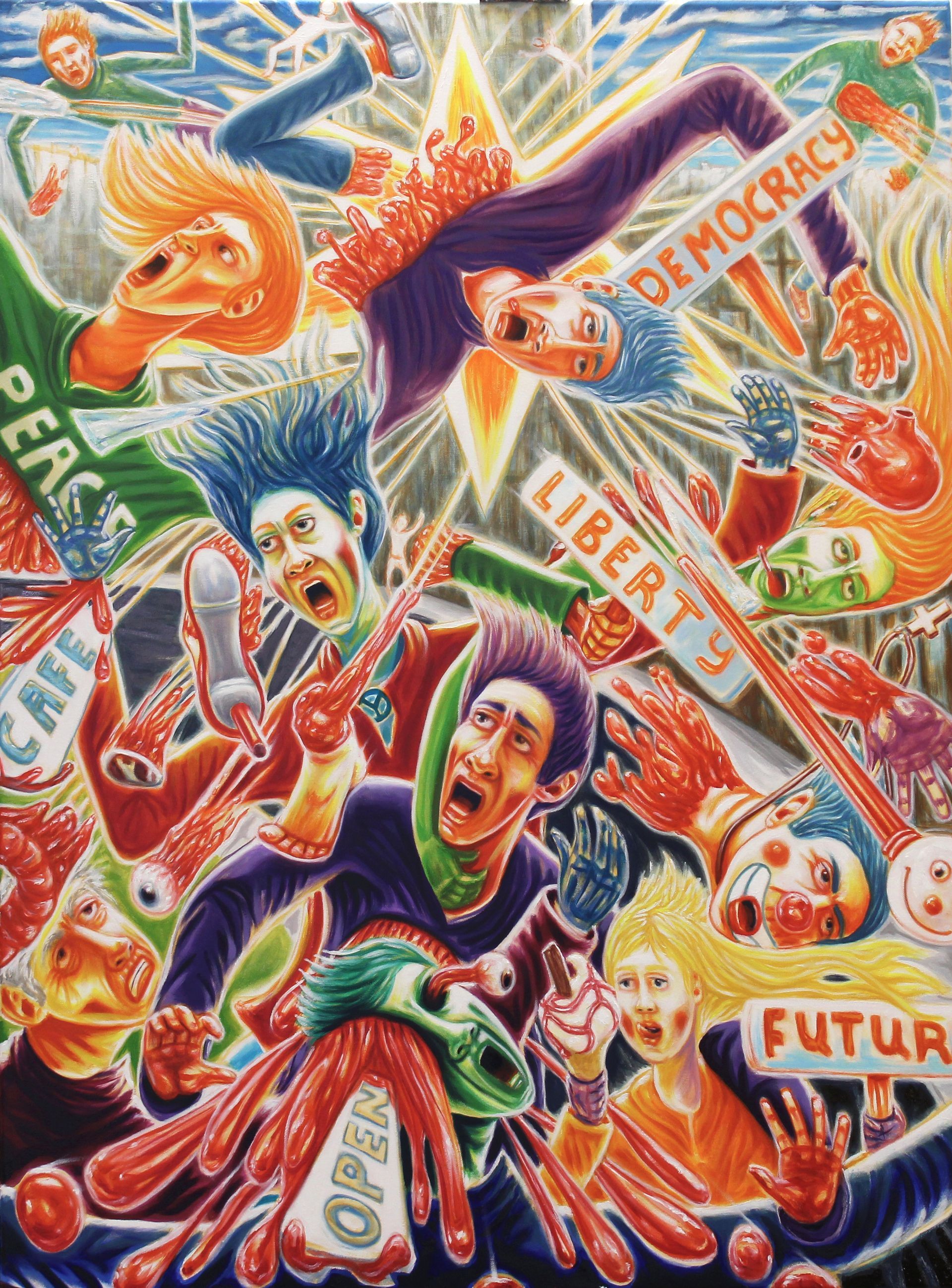
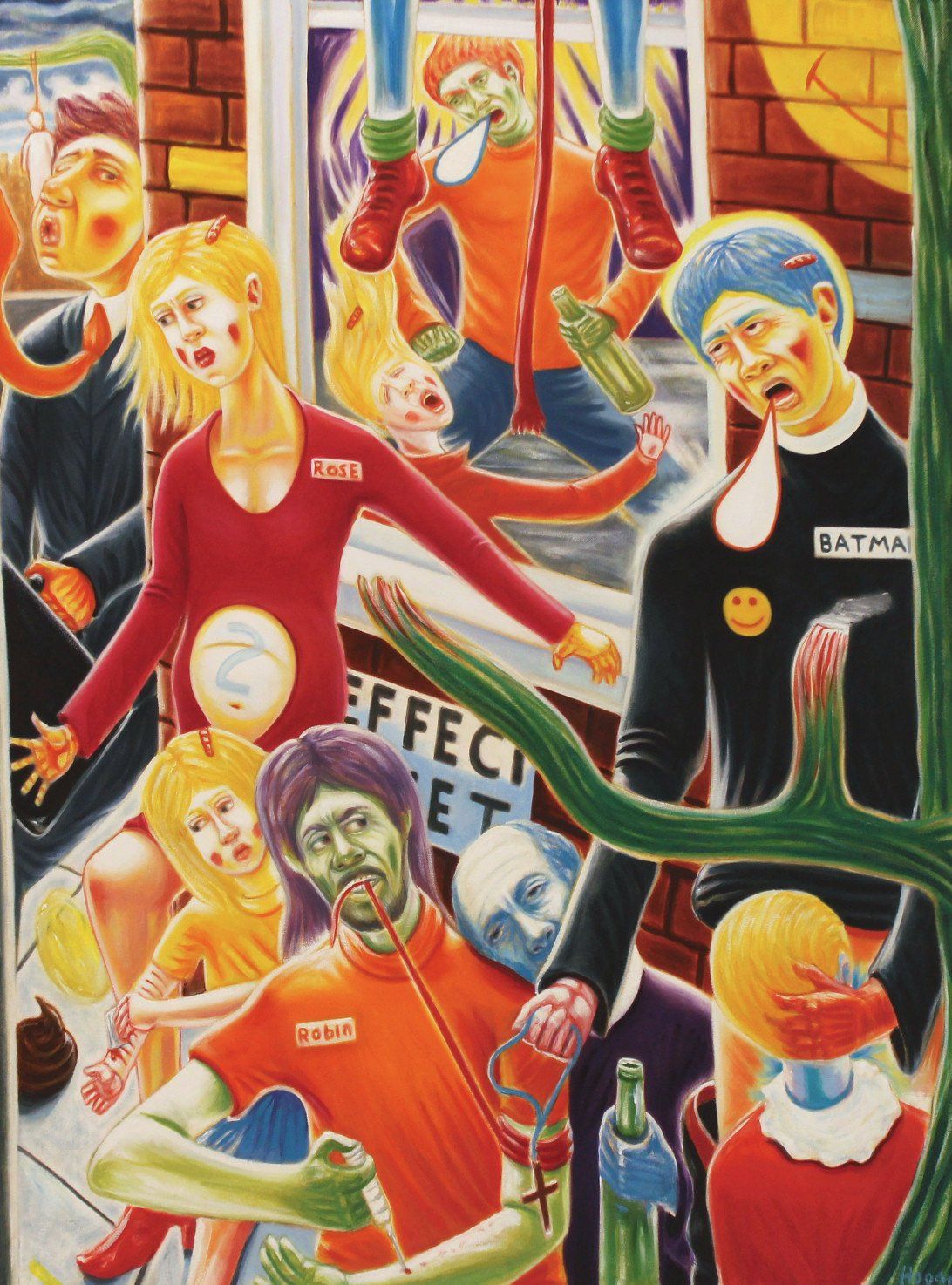
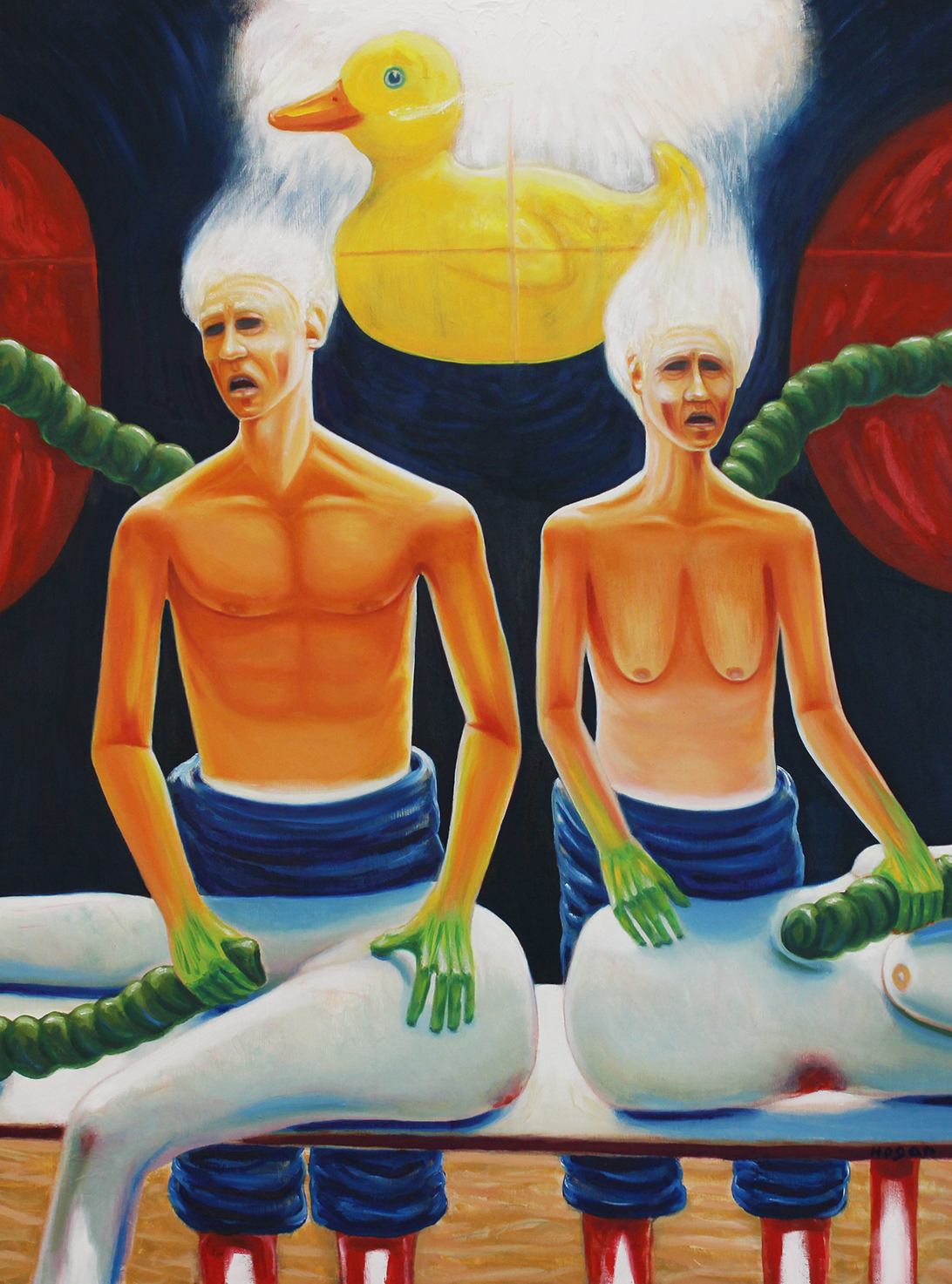
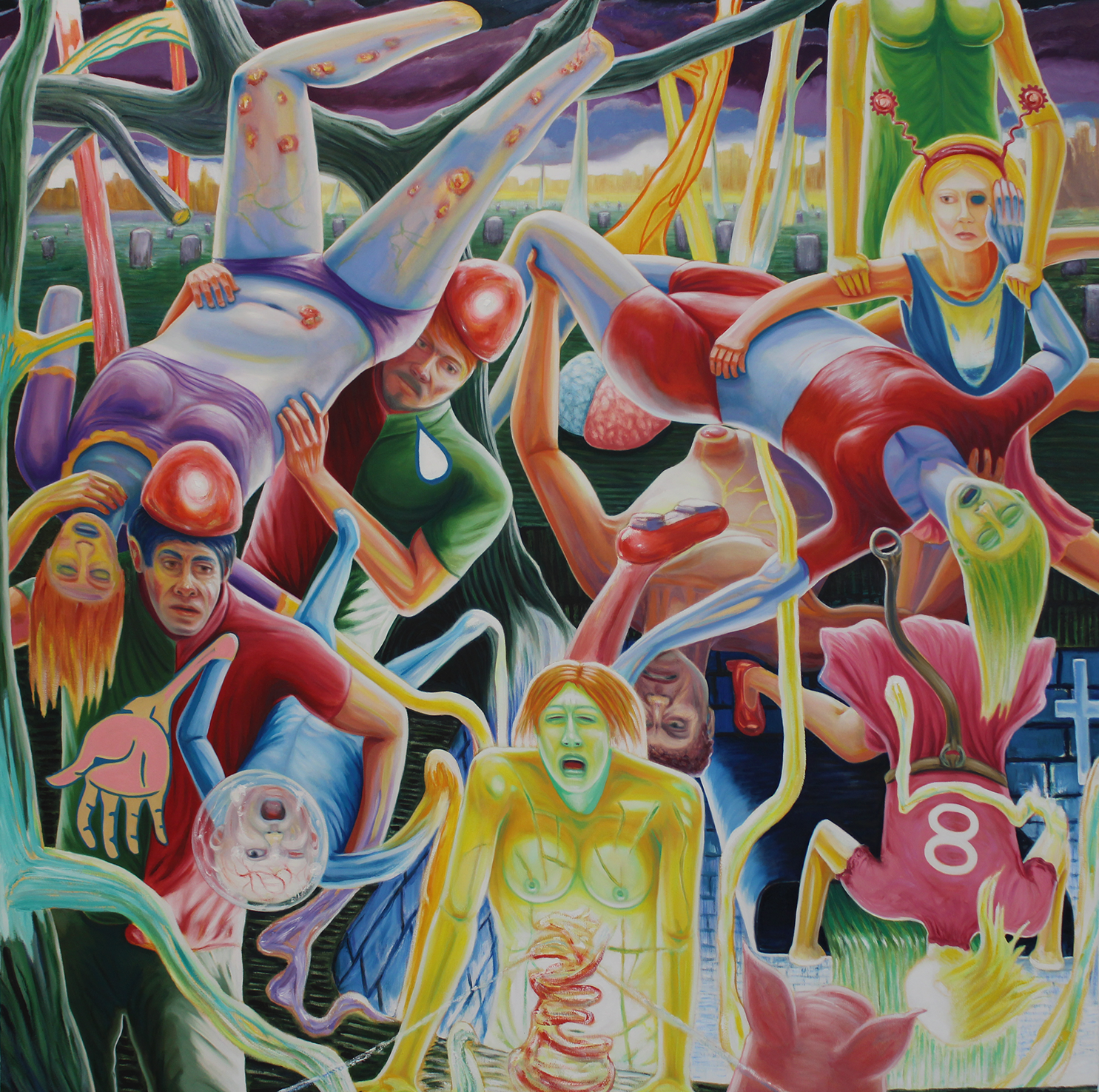
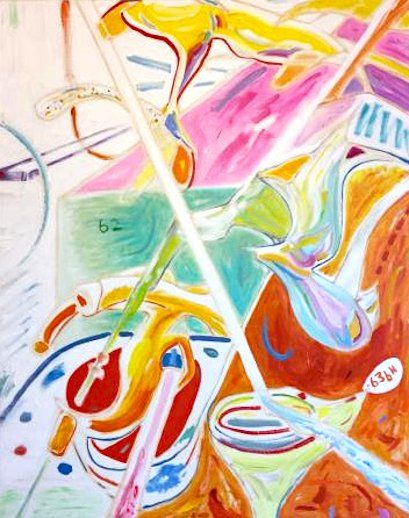
Painting within the digital economy.
An explanation of how painting operates within the digital economy, taken from my phd thesis: http://doi.org/10.17030/uclan.thesis.00058801
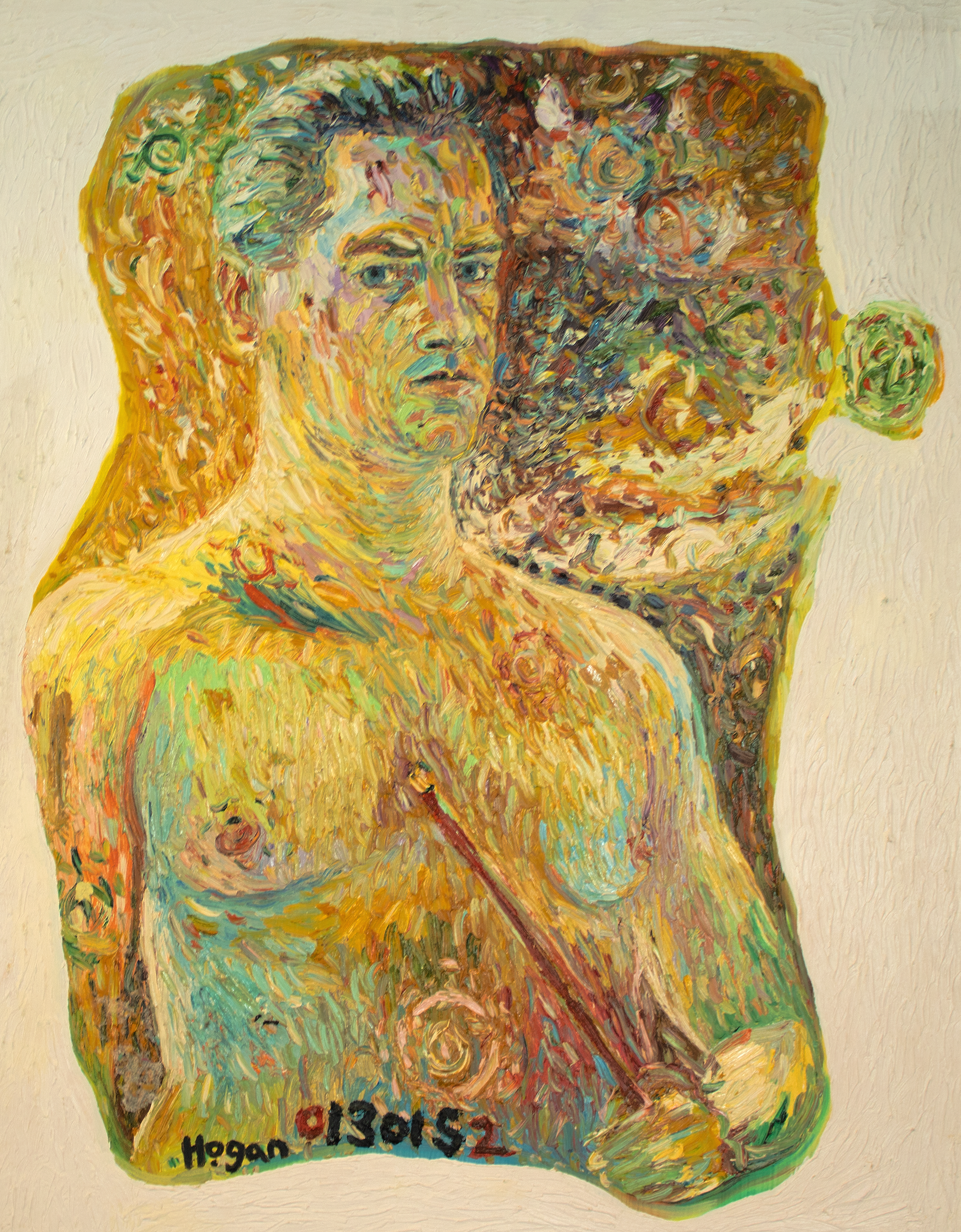
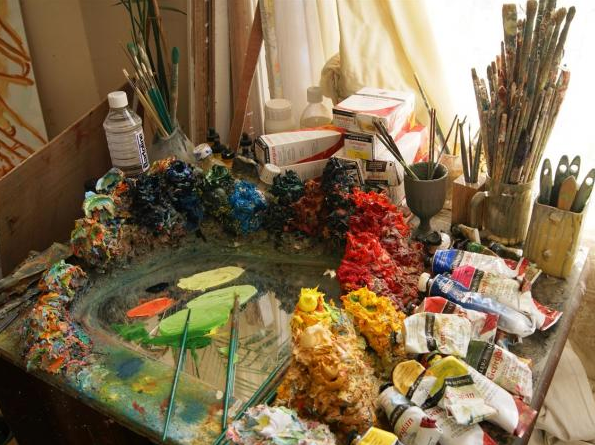
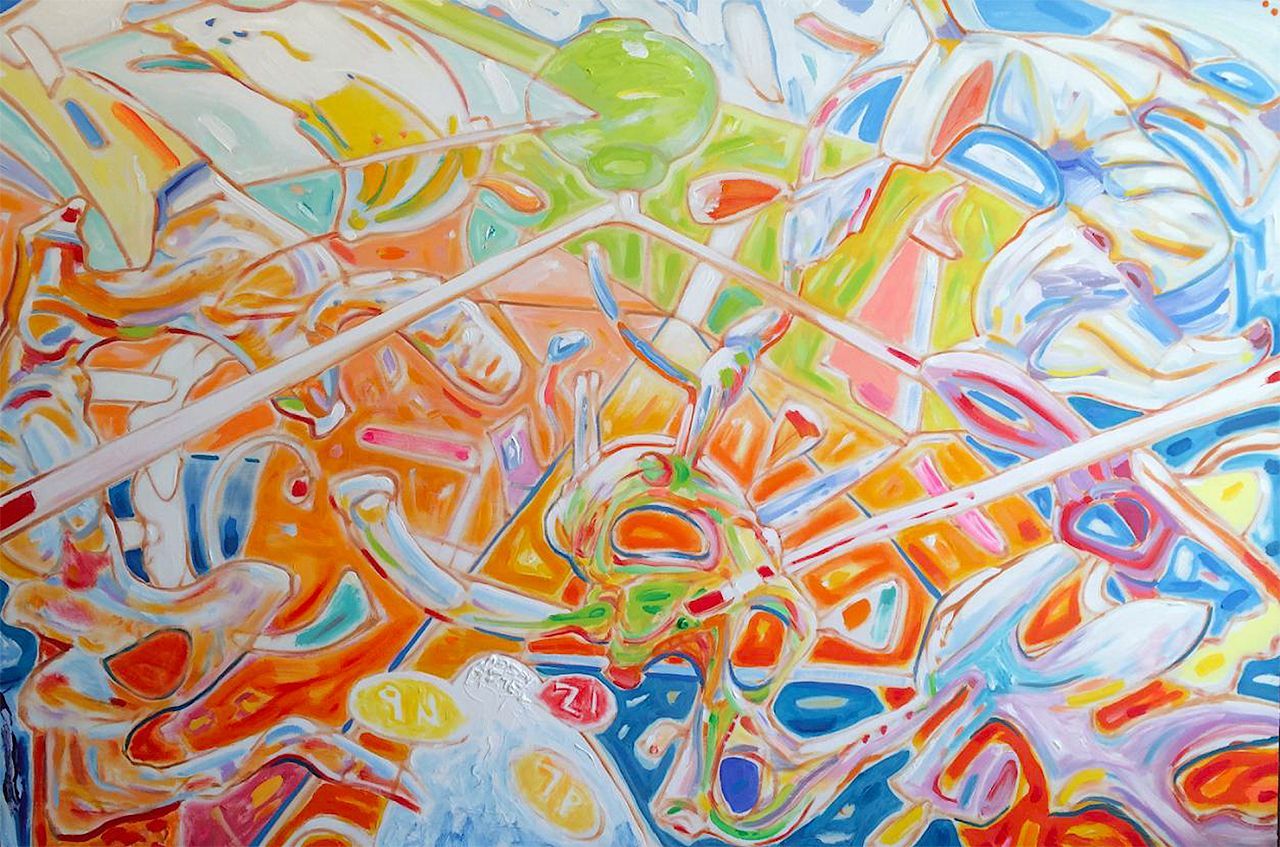
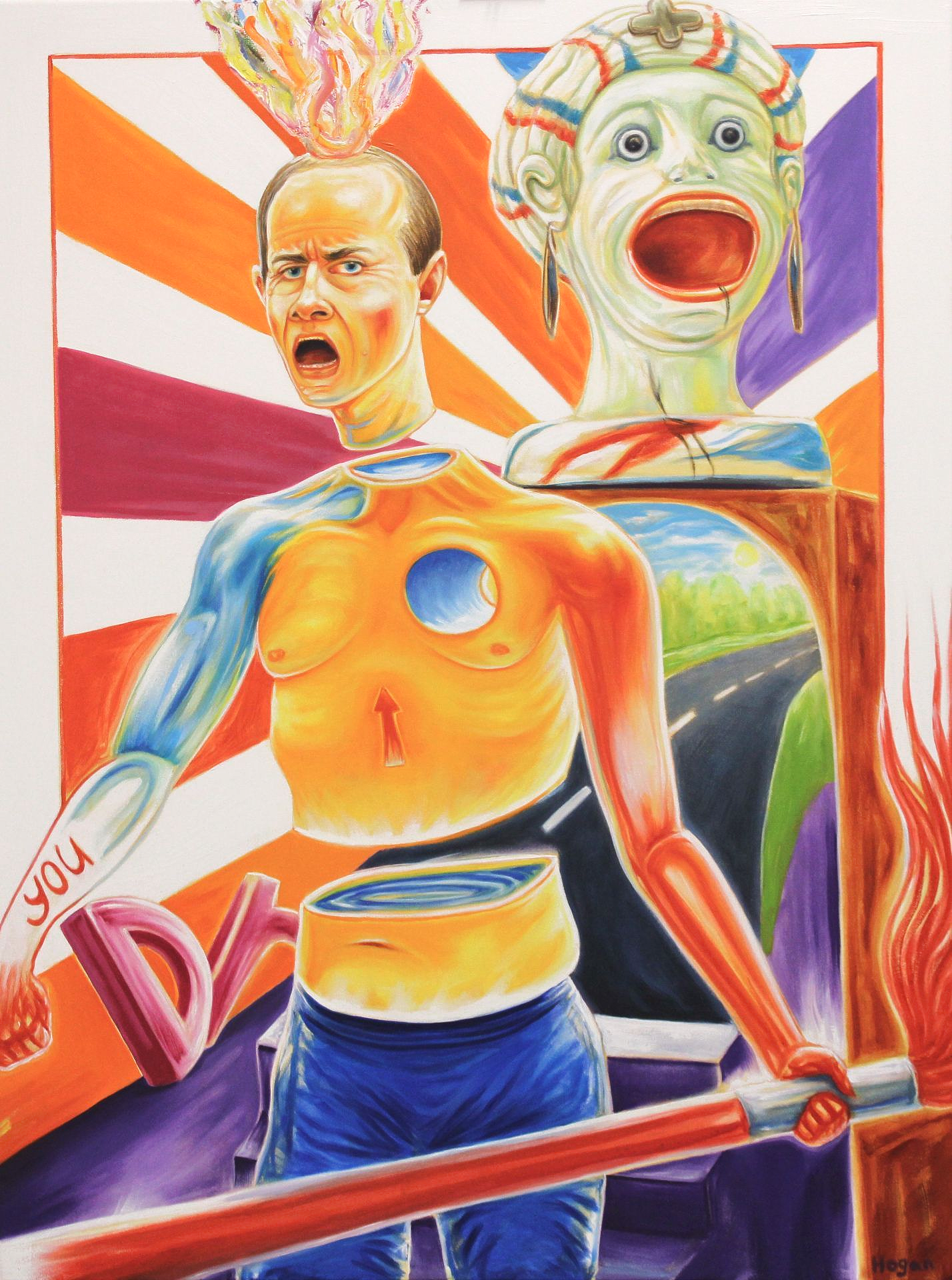
It is true that the commercial potential of digital art is a major driver of its current popularity. Its ability to be reproduced and distributed instantly at near-zero marginal cost makes it a highly scalable business model compared to traditional "one-off" originals. Technological advances have necessarily encroached upon all aspects of contemporary art, through both making processes and curational methodologies. An example of digital curational methodologies is the recent immersive, 360-degree surround, digital experience, retrospective exhibitions of Van Gogh, and David Hockney. I argue that this process of viewing painting has reduced the paintings to a cold facsimile of the reality of the original work. I believe Van Gogh himself would abhor this treatment of his work. David Hockney has seemingly reveled in his own reduction of originality through digitization, in my view, succumbing to the dehumanizing digitalization of a capitalist society; the neoliberal economy seeks to control, master, and extract aliveness. It exploits our desires - this form of capitalism is after our subjectivity, even our very lives, and defines the socio-cultural ontology of the populace (Graw, 2019, p. 252). This apocalyptic posthumanism recuperates essentialist notions of a fixed, natural human nature, with definite, sacrosanct limits. Transgenics, xenotransplantation, genetic engineering, neuropharmacology, and machine/flesh cybernetic amalgams are all understood as threatening the ontological purity of the human, where the essence of humanity is understood in biologically essentialist terms (Seltin, 2009, p. 44). The fine arts have redefined painting as post-digital formalism; this has resulted from the conflation of the medium and the formal parameters of an artwork to the media networked mass communicative status of an artwork (Frew, 2023). Paintings possess haptic qualities, and tacit knowledge. I argue that it is not possible to reduce painting to a conflated version of itself, without acknowledging paintings intrinsic, human prestige. The pixelated view of painting through digital processes has devalued painting, reducing painting to the singularity of digital evaluation, to a shadow of itself, paintings soul has evaporated to the level of everything else, lost in a sea of oneness. I have argued that the reification of satire through digitization has necessitated a separation of the seriousness of satire found in art compared to the majority of digital visual data, which Holm describes as pseudo satire. This reification premise should also be applied to painting within the digital space. I would argue that by becoming part of the digital space the work is no longer a painting, and has become a pseudo painting, a shadow of itself.
In this context, I also postulate that the historic tendency of photography to offer its technological prowess as a direct threat to the visual arts is unfounded, not least, because photography’s earliest writings link its foundations to technological advancement. Eugenia Parry Janis notes: “the inventors of photography did not wait for the historians to make their discoveries part of written history” (p. 548). "They assumed the task themselves. By situating the discoveries within the evolution of science and technology they established a tradition that would mark every written account that followed: the story of photography would be the history of its technological technique (Parry Janis, 1870, cited in Nickel, 2001 p. 549). Conversely, painting is opposed to technology. A photograph is a digital reproduction of reality; a painting is a unique representation of reality. Painting as a conventional quasi-linguistic act, stands in a semantic relation of reference to its subject, and presents a visual appearance, only as a means of fulfilling a referential function (Scruton, 2012, p. 582). A factor that differentiates painting from photography can be contextualized through the levels of imagination within the artist, that dictates the potency of their visual repertoire; imagination constitutes the terms of ontological potency, that is something familiar, distinctive, and important. Imagination consists of the capacity to generate images and mental states. My claim for the solemnity of painting as a driver for satire, as opposed to photographic means, can be explained through Kant’s construct of the imagination. The great benefit of this capacity is that, as Kant puts it; “the faculty of representing an intuition, an object that is not itself present” (Crowther, cited in Wolheim, 2001, p. 85). My work has its dependency within my own creative imagination. I do not use photography in any way. Photography has no use to me, other than in a documentative digital capacity. My work is to be viewed by exhibitions, situating the work within a natural environment whereby the haptic qualities and tacit knowledge can be observed. Alternatively, Geoffrey Batchen suggests; Photography is everywhere and nowhere in particular’, photography, once a relatively defined set of photographic chemical processes, is now, as a result of digital imaging technology, either riven by new permutations of image capture and manipulation or made completely redundant by images generated entirely by means of digital technology (Hawker, 2009). David Hockney, who has fully embraced technology, produces versions of his work on an I pad ‘drawing’ with a stylus on a touch screen. I argue that digital ‘painting’ is not painting, and therefore the term ‘painting’ should not be used to describe digital image making. The first touch of a digital pen upon a digital surface digitally reconciles the marks to a pixelated space. Materiality is lost; the indexicality of the authors’ marks is compromised. The emphasis of the handmade indicates an awareness of painting’s phantasmic potential, how it unleashes vitalistic fantasies through the mere suggestion that the work contains the artists’ handcraft, physical labor, and lived time (Graw, 2019, p. 175). Conversely, photography overcomes subjectivity by automatism by removing the human agent from the act of reproduction. Photographs are not representations at all; they are the practical realization of objectivity and detachment. The use of a machine to lay down lines through the reliance on the natural laws of refraction and chemical change (Snyder and Allen, 1980). A photograph of a painting is a copy of it, not a painting. When photographed the image of the painting acquires an extra pixelated surface between reality and the work, this extra surface can only be within the context of the photograph, the painting remains, as an independent quantity:
Photographers throughout history have attempted to create entirely fictional scenes through photography and have arranged their models and surroundings, in order to produce a narrative scene with a representational meaning. However, the process of representation was affected even before the photograph was taken. A photograph of a representation is no more a representation than a picture of a man is a man (Scruton, 2012, p. 595).
A photograph can be argued to have an independent self; however, this self cannot be compared to the materiality and indexicality of painting. Painting’s vitalist projections of liveliness, its indexicality evoking a self-determined work process that is fascinating and desirable, especially in a digital economy, where it is most incongruous (Graw, 2019, p. 195).
Self-determination is in association with the authorial creativity relationship. As has been discussed, postmodernist relativism negates the author concept. However, the notion of the author can be sustained within Bourriaud’s universalism and understood through Lawler’s argument of constructed human truth, that is, un-ideally subject to the alienation specified within postmodernist relativism. The digital network economy makes a definitive break with postmodernism’s restrictive view of painting. “Digital network biopower’ is a form of regularization that takes aim at the way we live.” (Foucault, cited in Graw, 2009, pp. 272-276). This, in turn, informs the deconstruction of painting, observed through the digital homogenization processes. There is a connection between the forceful impact of digital culture, on painting. Painting’s materiality is a way of compensating for the disembodiment and dematerialization effected by the digital economy (Graw, 2009, pp. 272-276).
Alternatively, within the framework of altermodernity’s universalism, the digitization of art may also be framed with some positivity:
Within the crypto-humanist discourse’s born of cultural studies and postcolonial studies, the sole element that has been bequeathed is the sphere of technology. Art becoming a lingua franca in which artists, whatever their nationality, can legitimately show their cultural differences, which are inscribed in the new context constituted by the technological apparatus, a context that is universal by default (Bourriaud, 2009, p. 30).