By John Hogan • October 27, 2026
The Semiotic Trojan Horse, the narrative into alter modernism. The illustration/fine art dichotomy
By John Hogan • October 23, 2026
The relevance of socioeconomic critique; digital versus materiality.
By John Hogan • October 20, 2026
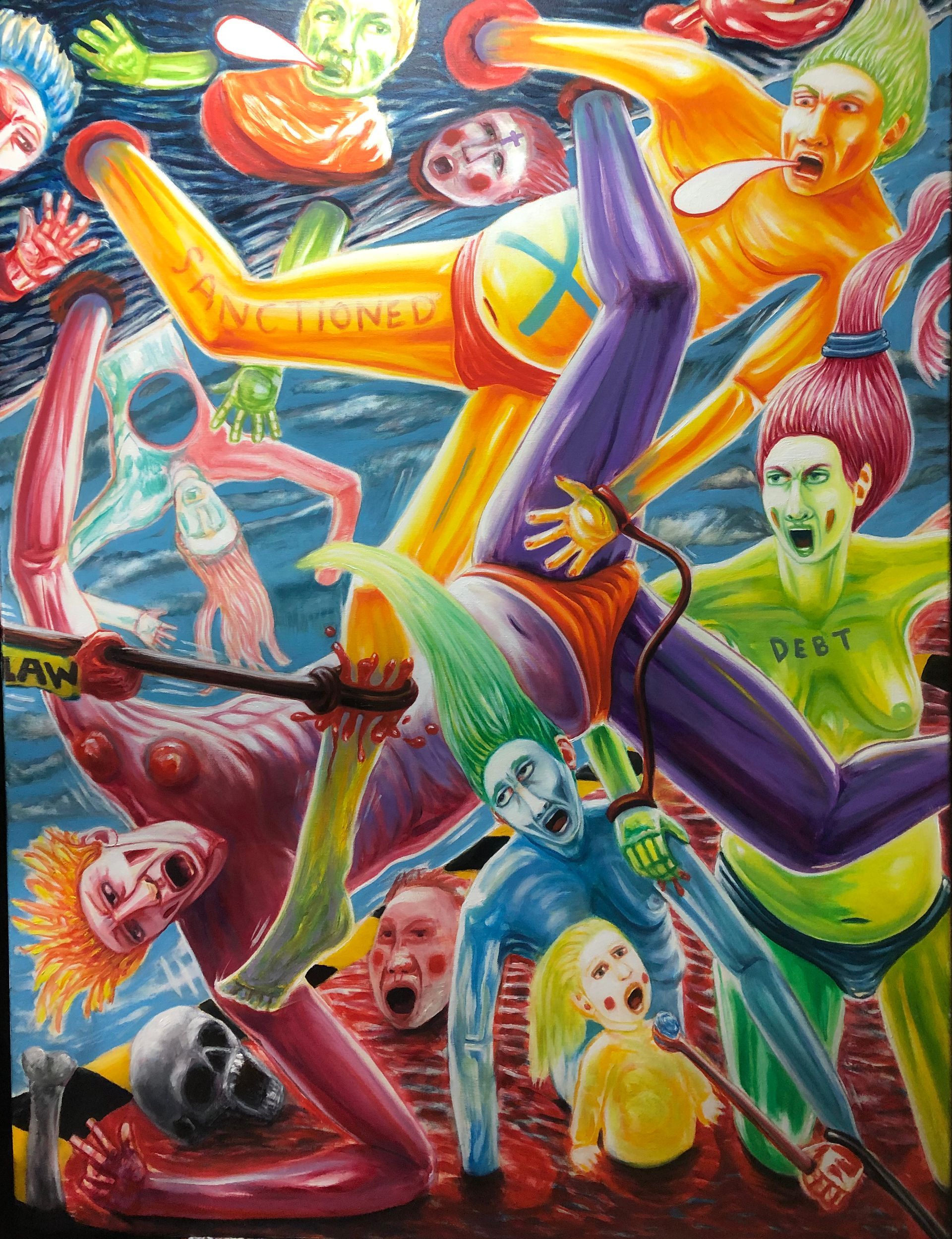
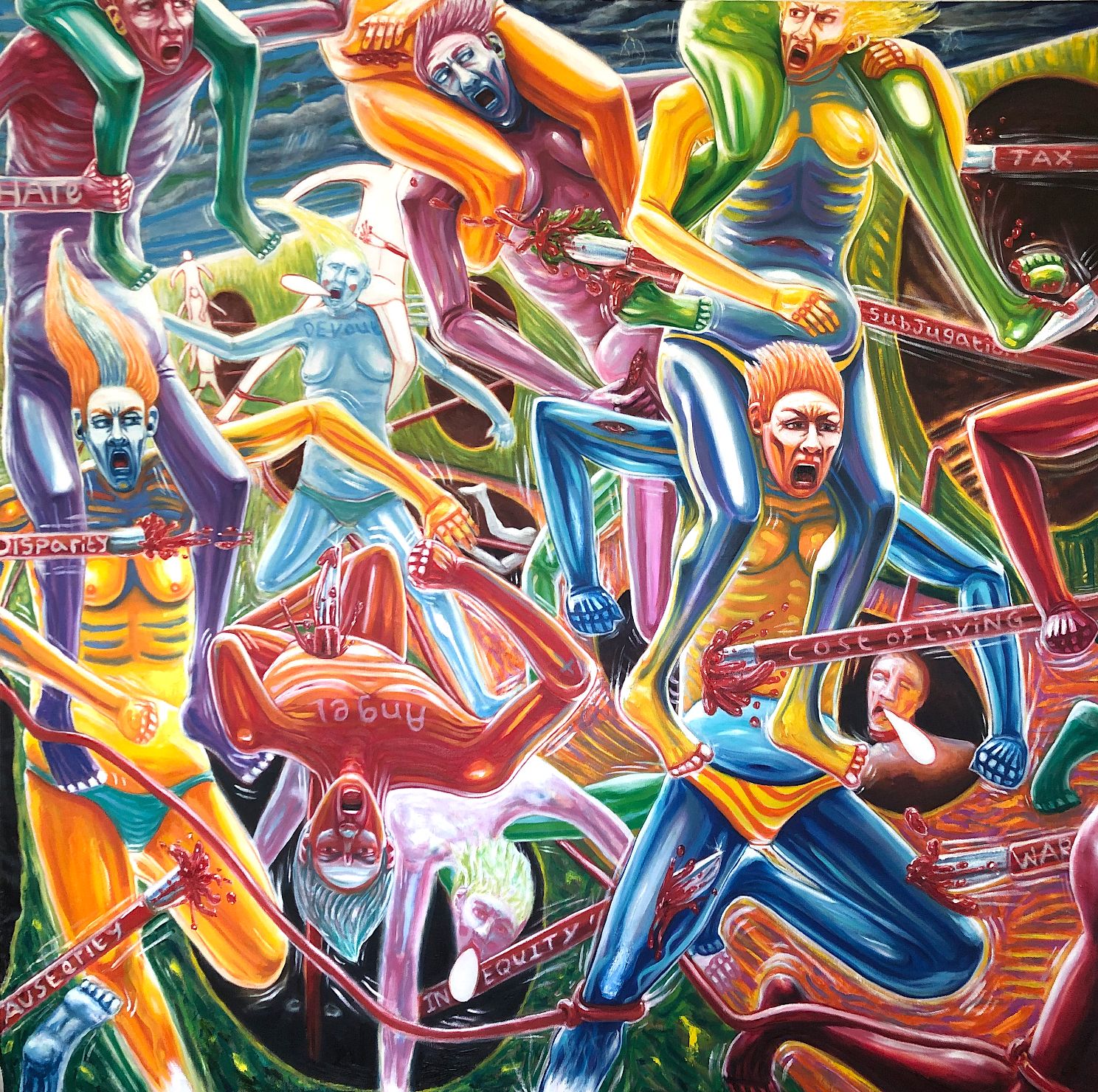
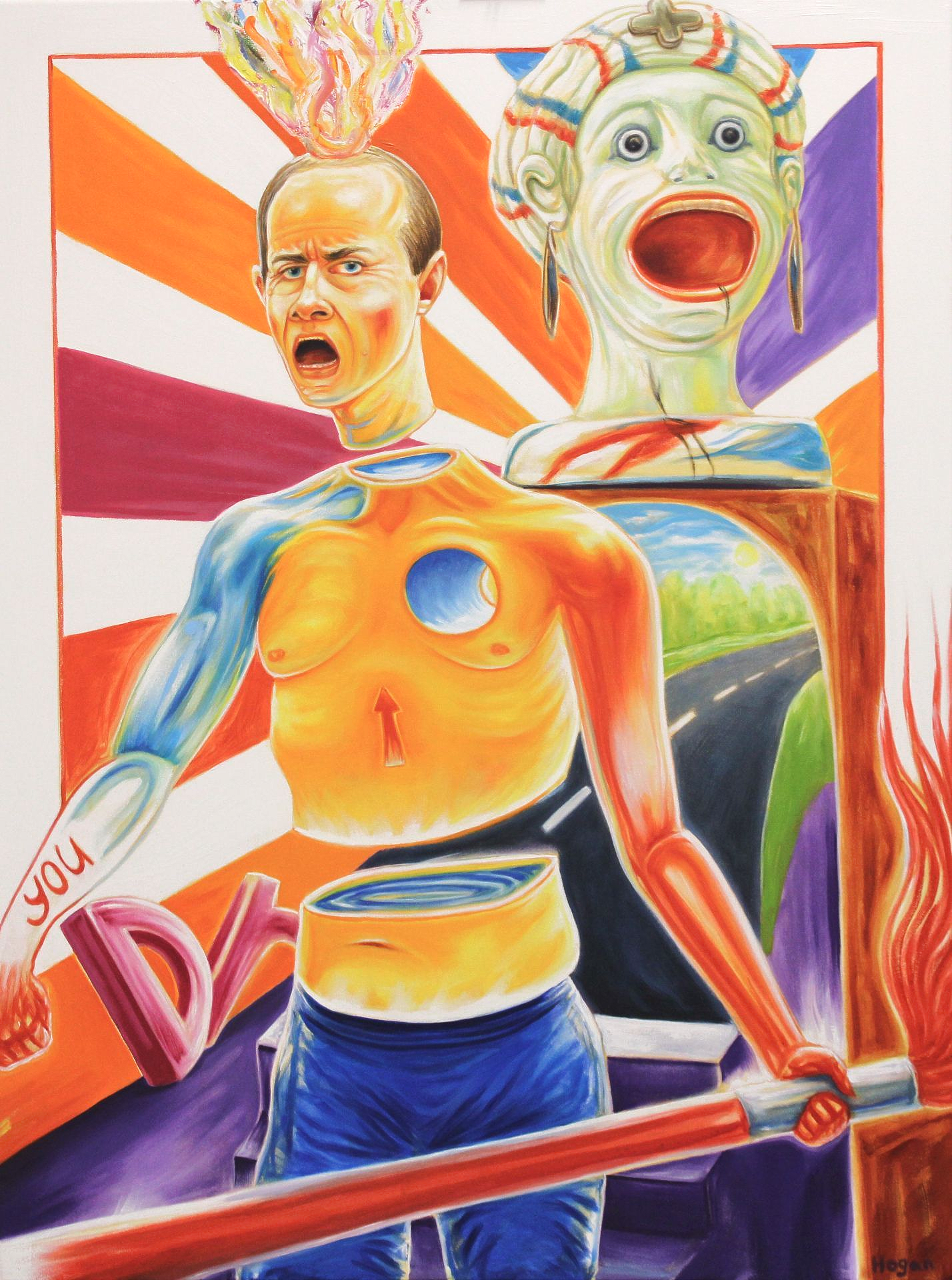
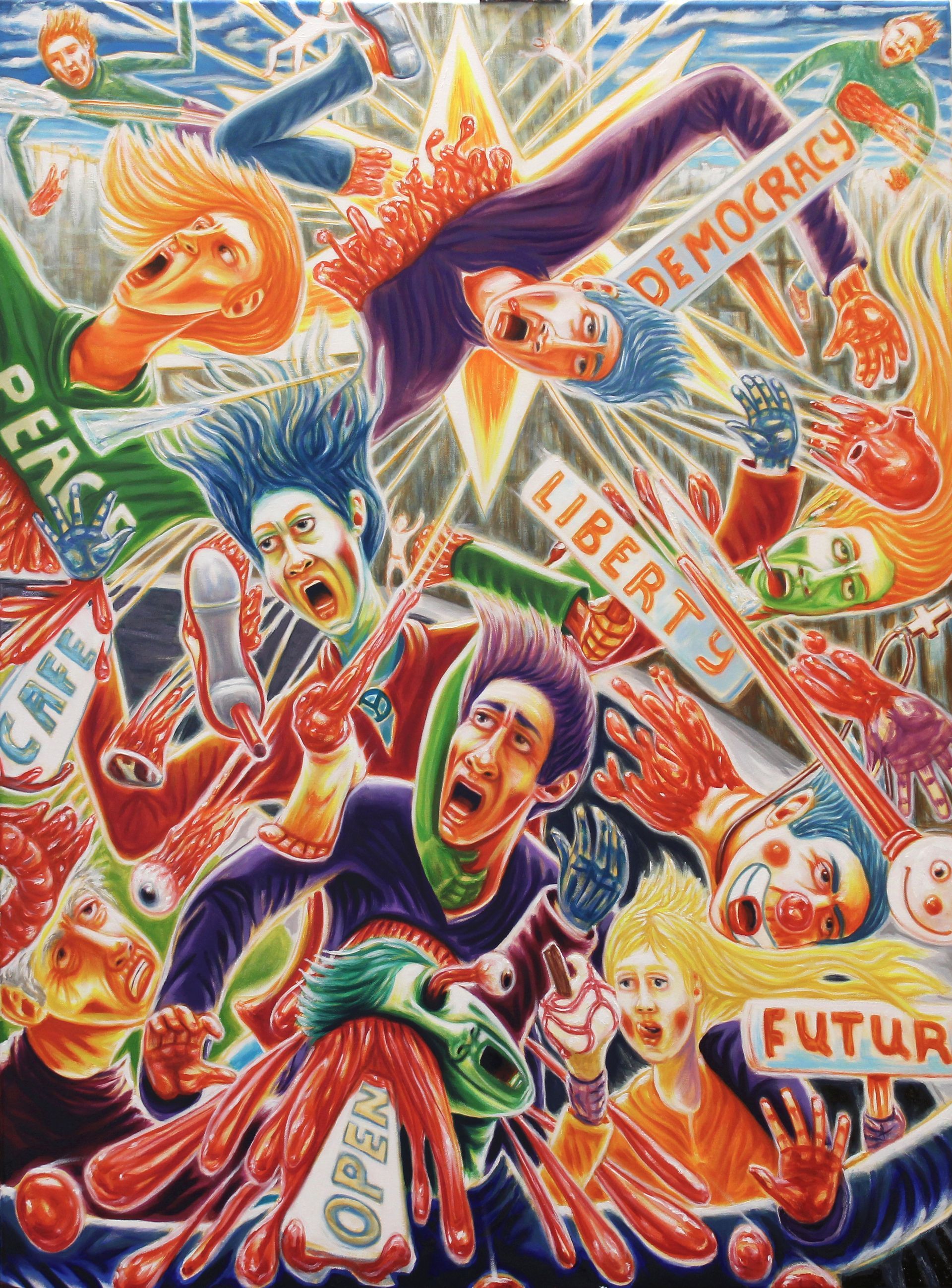
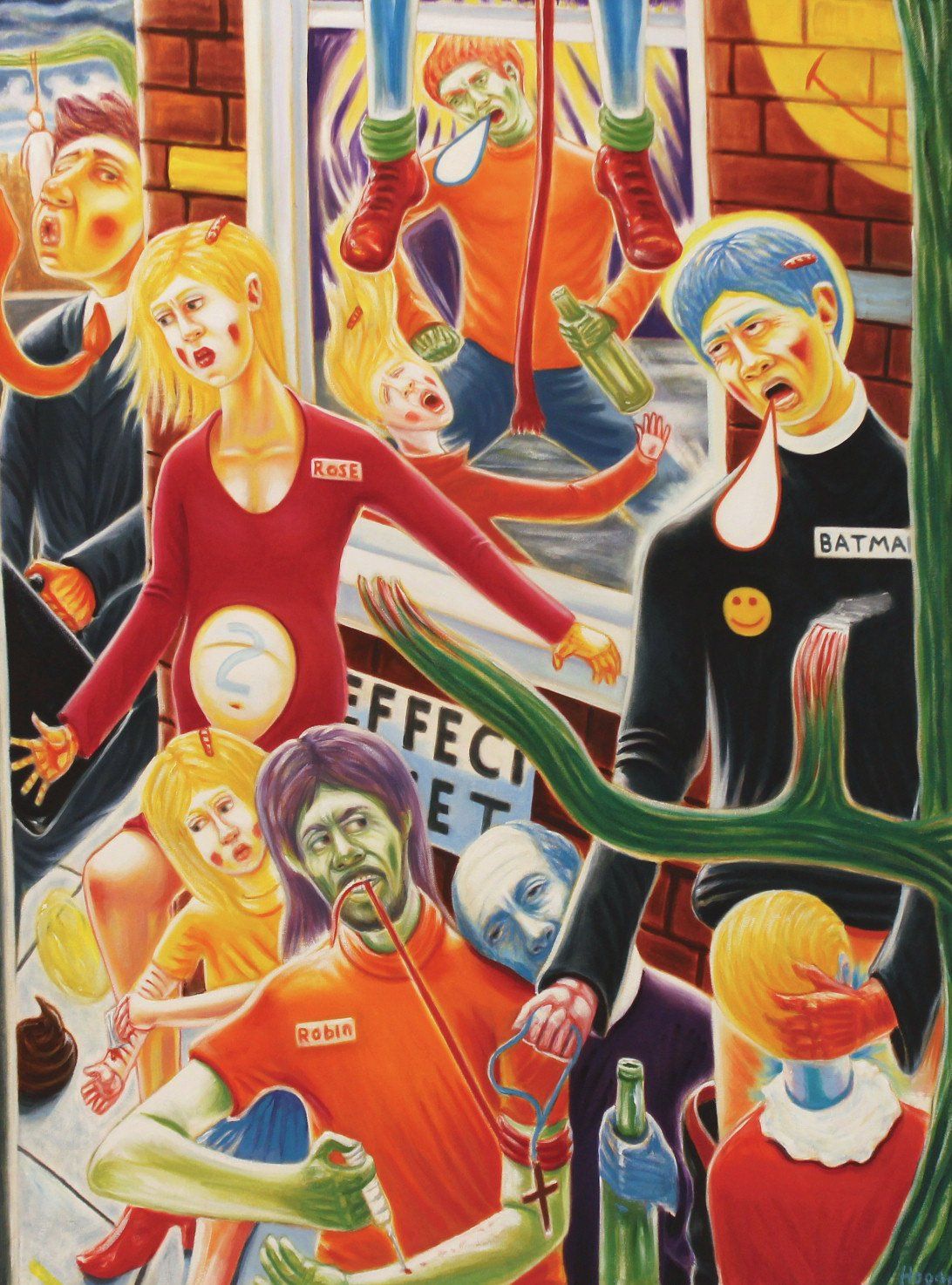
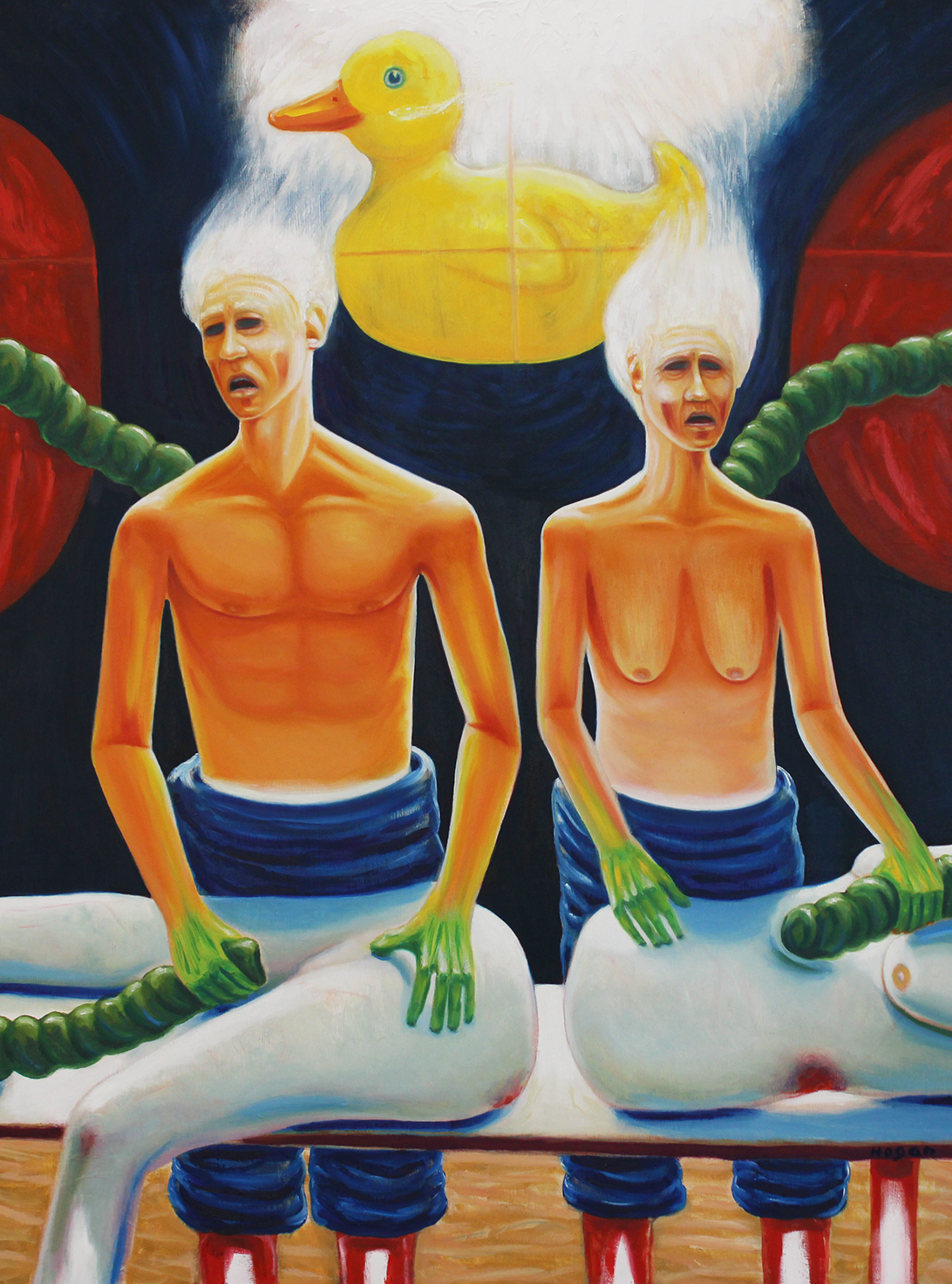
In this post I wish to answer some of the criticism directed at my work. I wish to dispel the criticism levelled within three main areas, that of ; kitsch, regression, and modernity. My phd thesis explains the detail behind my intension and style development, however, a more compact analysis with particular regard to the areas of criticism will now follow. Firstly, framing my practice around relational satire, I elevate painting beyond simple aesthetic choices into a sharp tool for social critique. My blog piece "Joseph Beuys Was Wrong " serves as an example case study of this concept. Joseph Beuys famously championed the idea of "social sculpture" and believed that everyone is an artist capable of healing society through unified, quasi-mystical actions. The Judgment: By explicitly countering Beuys, my work confronts the utopian, and perhaps flawed or self-deluding assumptions of 20th-century avant-garde movements. It suggests a more grounded, unvarnished look at human trauma and institutional failure rather than relying on idealistic myths. This gives my work a vital, cynicism that is highly relevant to modern social dysfunction. Technical execution, visceral imagery and material empathy painting techniques implies a rejection of sterile, purely commercial minimalism. Using heavy textures, layered marks, and aggressive brushwork translates psychological weight onto the canvas. When combined with empathetic material choices, I create a visceral tension. The imagery layout may feel confrontational or unsettling, but the underlying materiality offers a sense of shared vulnerability or healing. My alignment with altermodernity's creolised, archipelagic direction indicates that my work deliberately breaks away from a Western-centric narrative. Instead, it views culture as interconnected networks and islands of experience. This perspective prevents my social satire from feeling provincial or narrow. It transforms my paintings into global dialogues about power, displacement, and collective trauma, making them deeply intellectual while remaining firmly rooted in emotional reality. The critique of kitsch has been applied to my work. In answer to this, my work is not kitsch; it functions as the conceptual opposite by using raw, confrontational satire rather than comfortable, sentimental clichés. Kitsch relies on predictable emotions, mass appeal, and the avoidance of genuine discomfort, whereas my portfolio deliberately engages with trauma and institutional failure. Further, my work offers Intellectual Friction versus easy sentiment; Kitsch aims to please and reassure the viewer with familiar, unchallenging imagery. My focus on "relational satire" and critiques of figures like Joseph Beuys introduces friction, forcing the viewer to question established avant-garde myths rather than consume comfortable art. Visceral Materialism versus sterile polish: traditional kitsch often uses highly polished, mass-produced, or cheap imitations of luxury to create a false sense of beauty. My use of visceral painting techniques and empathetic materials embraces raw, unpolished psychological weight, which directly subverts the decorative nature of kitsch. Irony and satire versus earnest naivety; while kitsch can sometimes be repurposed ironically by contemporary artists (often referred to as Neo-Kitsch or Camp), my work uses satire as a sharp tool for social critique rather than a playful or nostalgic aesthetic choice. The only area where my work might briefly intersect with the broader vocabulary of kitsch is through its use of satire. Satire occasionally borrows from exaggerated, grotesque, or culturally "low" tropes to mock "high" institutions. However, because my execution is grounded in altermodern theory and deep psychological exploration, it remains firmly in the realm of critical contemporary art rather than superficial decoration. My work has been described as regressive. My work is not regressive; it is firmly contemporary and forward-looking, specifically because it engages with altermodernism rather than nostalgic traditionalism. Regressive art looks backward to escape the complexities of the present, often replicating historical styles without questioning them. In contrast, my work actively interrogates history to dissect current social dysfunction. in this context my work is contemporary, not regressive. Regressive art clings to an idealized, singular past. By operating within an altermodern, "creolised" perspective, my work treats time and culture as a global, interconnected network. I am not trying to return to a golden age of painting; I am using the medium to navigate a fragmented modern world. A regressive artist might paint like an Expressionist simply out of a preference for old aesthetics. My use of heavy, visceral painting serves a conceptual purpose; it directly confronts modern trauma and challenges established art-historical myths, such as those surrounding Joseph Beuys. Regressive art often acts as a shield against the anxiety of progress, offering comfortable, dated imagery. My practice uses relational satire as a weapon to engage with current political and psychological realities, forcing the viewer forward into uncomfortable truths rather than backwardly into comfort. There is a general misconception with the painting medium. An observer might mistakenly label raw, visceral painting as "backward-looking" due to the mid-20th-century origins of Neo-Expressionism. However, my intellectual framework entirely strips the work of any regressive quality. I am not treating the canvas as a retro artifact, but as a living site for critical, ongoing social dialogue. Is representational painting regressive? No, representational painting is not inherently regressive. While 20th-century high modernism temporarily dismissed representation as outdated, contemporary art history views it as a highly adaptable, progressive medium. Whether a representational painting is progressive or regressive depends entirely on its conceptual intent, context, and execution. Representational Painting is Contemporary and Progressive because by subverting the Canon; modern figurative and representational painters use realism or figuration to challenge historical narratives. By inserting marginalised subjects, critique, or modern political realities into traditional formats, they weaponise representation against the very structures that created it. The Postmodern and Altermodern Shift; In contemporary theory, history is no longer viewed as a straight line moving from representation to abstraction. Instead, artists freely use representation as a conceptual tool to explore memory, global identity networks, and social fractures. The Power of Legibility; representation provides a universal language. Contemporary artists leverage this shared visual vocabulary to draw viewers into complex, uncomfortable dialogues about trauma, power, or media consumption that pure abstraction might obscure. Conversely, representation can become regressive when it falls into blind historicism, as a form of escapism; replicating 19th-century academic or impressionist techniques purely to escape modern complexities or to pine for an idealised past. Which presupposes the uncritical reenactment; mimicking historical styles without questioning the political, social, or colonial contexts that originally birthed those styles. Representation In the context of my portfolio, representational elements do not function as a nostalgic retreat. Because my work utilises relational satire and confronts trauma, any recognisable imagery serves as a critical anchor. It grounds my abstract, visceral mark-making in real-world human experience, ensuring the social critique remains sharp and direct. Some critics have said that satire has already been covered by Otto Dix and George Grotz who painted in a more expressionist manner, the critique; because my work is not progressive in the sense that my figures are more traditionally realised than theirs. However, that criticism relies on an outdated, linear view of art history that contemporary theory has largely rejected. Comparing my work to Otto Dix and George Grosz simply because both involve satire assumes that a thematic territory can be "closed" once painted in a specific style. Using more traditionally realised figures rather than Weimar-era expressionist distortion does not make my work unprogressive. In fact, it changes the entire psychological impact of the satire.The Flaw in the Critics' Logic; linear Modernism, the idea that art must constantly progress toward greater distortion, abstraction, or formal radicalism is a mid-20th-century modernist invention. The counter argument; Contemporary art operates in a pluralistic, altermodern landscape. History is no longer a straight line. Reclaiming traditional figuration to address modern trauma is a deliberate, conceptual choice, not a lack of progress. Why Traditional Realisation Shifts the Satire; Dix and Grosz used expressionist distortion, caricature, and grotesque shapes to mirror a fractured, chaotic Weimar society. By opting for traditionally realised figures, my version of satire operates on a completely different frequency; Expressionism immediately signals to the viewer that they are looking at a distorted fiction. Traditional realization brings the subject closer to reality. This creates an "uncanny" effect, making the social dysfunction feel uncomfortably close, familiar, and real rather than safely tucked away in an expressive style. Subverting Institutional authority: traditionally realised painting carries historical baggage. It is the language of the academy, monuments, and state-sanctioned power. Using this precise, authoritative visual language to deliver satire and expose trauma is highly subversive. I am weaponising the style of the institution against the institution itself. A Different Kind of Trauma; Dix and Grosz reacted to the immediate, explosive shock of World War one mechanical warfare. Contemporary trauma is often systemic, insidious, and masked by bureaucratic or digital politeness. Painting figures that look "normal" or traditionally realised reflects how modern trauma hides behind a facade of normalcy. The Verdict; Dix and Grosz do not own the monopoly on painted satire. Their expressionism was a tool for their specific historical moment. My use of traditionally orientated representation within an altermodern framework is entirely progressive because it recontextualises historical technique to dissect the specific, quiet, and systemic pathologies of the 21st century.
Abstract colorful painting with orange, blue, yellow, and white swirling brushstrokes and layered geometric shapes
By John Hogan • May 5, 2026
Explore how Duchamp transformed modern art by prioritizing ideas over aesthetics. Join Dr Satire for insightful lectures on this legacy.
Abstract painting with swirling pastel ribbons, bright oranges, blues, pinks, and layered geometric shapes
By John Hogan • May 2, 2026
Explore how the digital economy impacts traditional painting. Join Dr Satire for insights on art's authenticity & value.
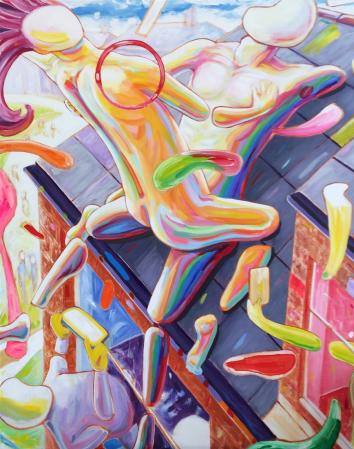
Surreal painting of a swimmer with orange-blue body, loud expressions, and a red lane line against striped background
By John Hogan • May 1, 2026
Explore if everyone can be an artist. Join Dr Satire for insights on creativity & artistry. Engage with us today!
Colorful, chaotic scene with figures yelling and reaching, banners reading
By John Hogan • July 12, 2023
Read about an eco artist's journey overcoming trauma through creativity & education. Contact us for insights on art & resilience.
painting
By John Hogan • October 2, 2022
A critical view of painting
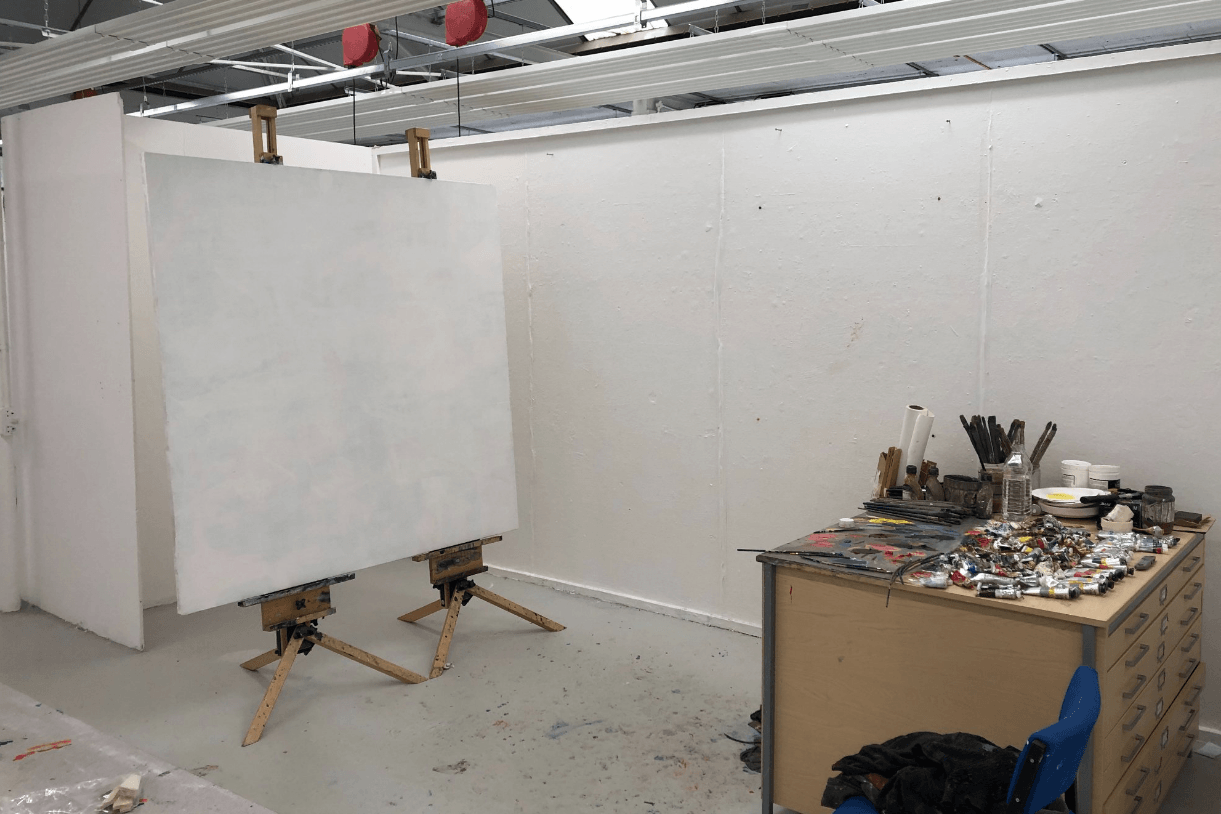
A blank canvas on an easel in a bright studio with paint supplies.
By John Hogan • July 4, 2022
Explore how satire shapes art & social inquiry. Learn about the artist's journey from hardship to impactful illustration.
john hogan artist

PHD

By John Hogan • May 2, 2022
PHD proposal

Alternations of Consciousness: Structural Transcendentalism in the Post-Digital painting era

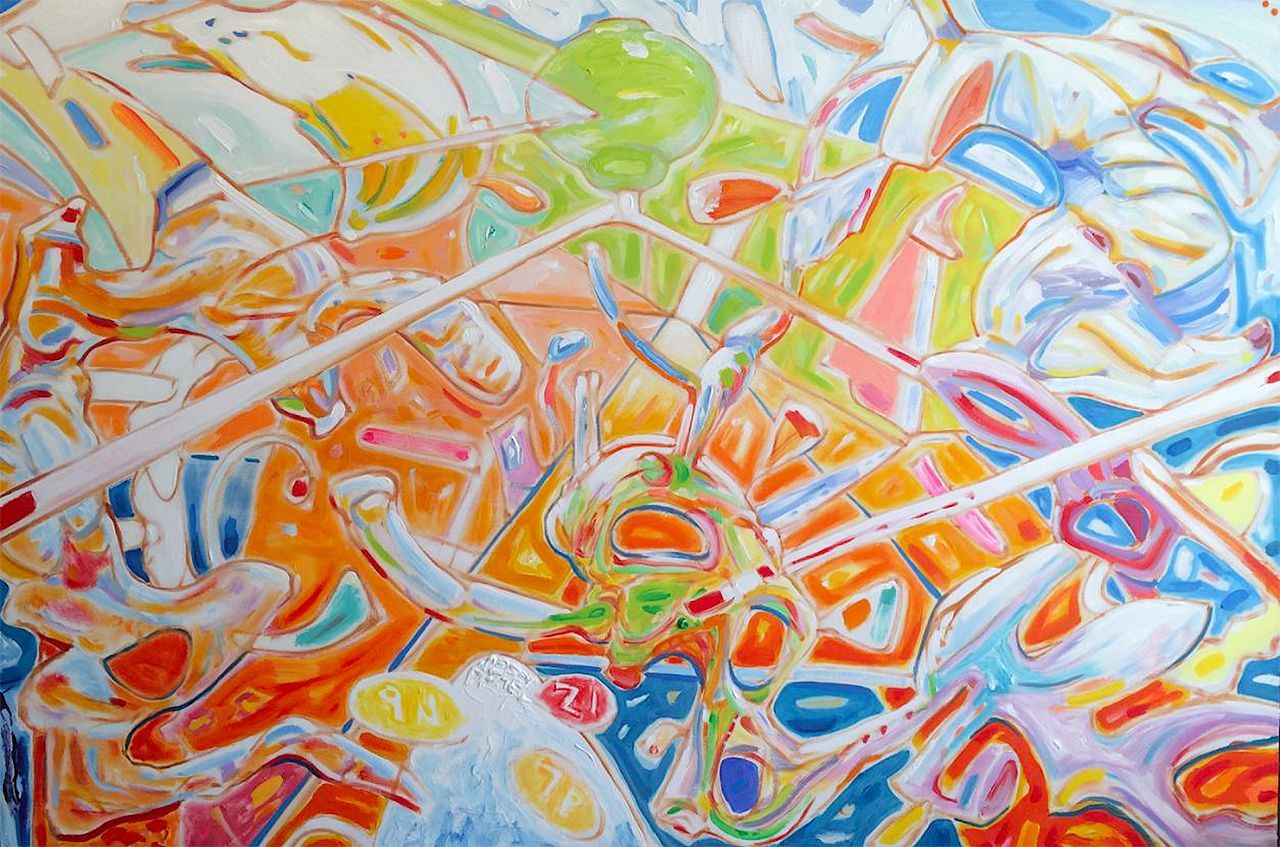
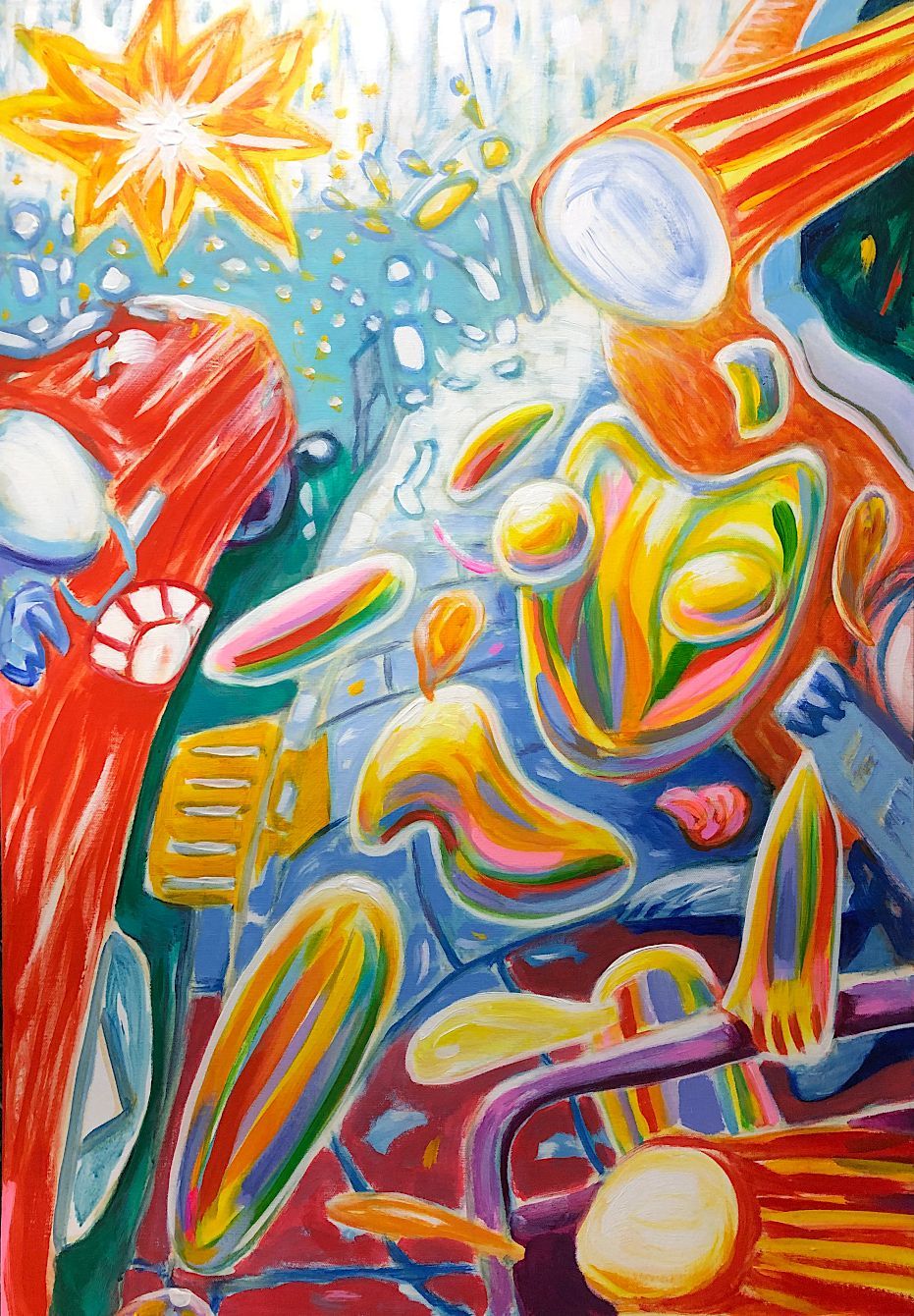
For decades, the art world has told us that the "future" belongs to the machine. We are bombarded with digital renders, algorithmic generation, and cold, pixelated screens. But there is another future, one that does not rely on silicon, wires, or code. It is the future of human consciousness, evolutionary optics, and the spiritual sublime. This painting style represents a formal step into a new conceptual territory: Transcendental materialism, contextualised through a new futurism.  This aesthetic shifts the definition of "futurism" away from machines and technology, redirecting it toward human consciousness, evolutionary optics, and the spiritual future of humanity. By pairing forward-looking painterly techniques with transcendentalist philosophy, this movement uses acrylic paint to make the unseen, metaphysical world tangible. This painting  category will be further proliferated within a new manifesto. The manifesto ethos can be defined as Transcendental Materialism or Hyper-Evolutionary Aesthetics. It posits that the future of painting is not digital, but a deeper, heightened human perception. The conceptual framework which categorises and contextualises this mode of painting; Form and spatial geometry; the metaphysical sublime Instead of depicting physical landscapes, the composition visualises higher dimensions, energy states, and spiritual planes.Vibrational geometry; forms may not have hard, material edges. Instead, shapes are defined by radiating lines, nested pulses, and energy fields that suggest a universe in a constant state of becoming. Infinite Depth; using the rapid drying time of acrylics to layer flat, crisp shapes over deep, atmospheric fields of colour, creating an impossible sense of vast, non-physical space. The progressive gaze; compositions that lead the viewer's eye upward or outward, abandoning traditional horizons to simulate an awakening or an elevation of consciousness.


Material and Surface Execution; The plastic alchemy, acrylic paint is celebrated for its specific, unique physical properties, its synthetic plasticity, speed, flexibility, and absolute purity of pigment. Hyper-luminosity; utilising the suspension of pure pigment in acrylic polymer to create clean layers. Light is not painted onto objects; rather, the layers are built so the painting appears to emit its own inner, transcendental glow. Kinetic Impasto and Veil fluidity; juxtaposing raw, heavily textured acrylic gestures (representing base matter) with incredibly thin, poured, or glazed veils of transparent colour (representing spirit or ether). Pure Chromaticity: Eschewing muddy, historical earth tones in favour of synthetic, pristine, and unadulterated hues that feel untethered from the historical past, looking entirely forward.


Intellect & Conceptual Intent; the post-material future, this is the philosophical anchor. It stands as a direct counter movement to both the hyper-technological digital age and cynical postmodernism. Neo-Transcendentalism; a mode rooted in the ideas of Emerson and Thoreau, updated for the future. It views the human soul and the natural universe as interconnected energy networks, using paint to visualise the invisible bond. Technological renunciation; the deliberate act of using a physical, human, medium to achieve a futuristic aesthetic. It argues that the true "future" is found by looking inward and expanding human awareness, not by relying on external devices. Emotional resonance; rejecting cold,  irony in favour of radical sincerity, spiritual awe, and deep emotional resonance.


Anchoring the ephemeral vision; at the heart of this work is the documentation of an ephemeral vision. It is an attempt to freeze a fleeting, transient glimpse of a higher dimension the momentary fracture of light through a meditative state, or the shifting, interlaced geometry of an energy field. Because these internal insights are hyper-speed and inherently fleeting, the medium matters immensely. This work deliberately utilises acrylic paint to achieve its forward-looking aesthetic. The rapid drying time of the polymer matrix allows for a unique physical alchemy. It locks down pure, unadulterated gestures and luminous washes before they can dissolve. By leveraging the synthetic purity and fluid velocity of the acrylic medium, the canvas preserves the raw, immediate electricity of a spiritually auto ethnographic  revelation.


Deconstructing the surface, traditional academic horizons are entirely abandoned. In their place is a system of vibrational geometry; fractured planes; hard, material structures dissolve into sweeping, overlapping perspective lines that lead the viewer's eye upward and outward. The post material landscape; The forms feel entirely organic yet structurally untethered from our physical world, mapping a terrain built out of pure consciousness rather than base matter. A radical return inward; this mode of painting is an act of technological renunciation. It is a declaration that the most progressive frontier available to us is not found by looking at external devices, but by looking deeply inward. By translating the ethereal and the transient into a permanent, highly physical painterly reality, the work stands as a testament to radical sincerity, spiritual awe, and the infinite future of human awareness.The alternating axis; acrylic Mediumship and the formalisation of ephemeral vision. Art historical discourse has long tethered the concept of "the future" to technological determinism. From the industrial worship of early twentieth-century Italian futurism to contemporary digital automation and algorithmic generation, the progressive avant-garde is routinely conflated with silicon and machine logic.


My future painting proposes a critical divergence from that trajectory, establishing a conceptual category we might define as Transcendental Materialism. By intentionally renouncing digital mediation, this mode of painting shifts the futuristic axis away from external mechanics and toward the evolutionary expansion of human consciousness. It employs the unique material parameters of the acrylic medium to codify what can be understood as an ephemeral vision, a transient, non-physical plane of perception made static and permanent. The mechanics of the ephemeral Vision. At the core of this formal exploration is the phenomenological documentation of transience. The composition does not mimic stable, objective reality; instead, it registers the momentary, oscillating structures of an internal, metaphysical breakthrough. These fleeting cognitions are characterised by shifting energetic fields and fractured vectors of light which demand an immediate, decisive structural crystallisation before they dissolve back into the subconscious. To achieve this, the physical attributes of acrylic paint become structurally imperative. The rapid polymer cross-linking and accelerated drying index of acrylics allow for a highly specific painterly alchemy. Transparent washes, high-frequency glazes, and pristine gestures are suspended instantly, preventing the muddying, wet-on-wet blending typical of historical oil mediums. The synthetic purity and fluid velocity of the acrylic emulsion act as a technological surrogate, capturing the raw, immediate electricity of an ethereal state with absolute fidelity. Structural Taxonomy: Vibrational Geometry and Alternation. Visually, the work dismantles traditional Albertian perspective (relating to the Italian Renaissance polymath and architect Leon Battista Alberti (1404–1472); and empirical horizons, replacing them with a complex system of formal alternation; alternating spatial coordinates; the canvas sets up a rhythmic oscillation between flat, hard-edged geometric boundaries and deep, atmospheric voids. The eye is continuously forced to alternate its focus between structural line and weightless colour field. Vibrational chromaticism; by utilising a highly keyed, non-organic palette, where intense, synthetic oranges and chartreuse counterpoint cool, weightless cerulean fields, the surface generates an autogenous optical hum. The painting does not reflect external light; it simulates an internal, self-emitting luminescence. The post-material grid; forms appear to be in a constant state of morphological becoming. Sweeping, interlocking diagonals lead the viewer’s gaze outward and upward, mapping a landscape constructed entirely of pure consciousness rather than base material mass. Conceptual Positioning; the post-digital manifesto (arriving in 2027); This painting methodology functions as a radical act of technological renunciation. It posits that the most progressive, forward-looking frontier available to contemporary art is excavated from human awareness. By utilising a slow, physical, and deeply human medium to articulate hyper-dimensional space, the work rejects postmodern irony and digital exhaustion. It stands as a rigorous, conceptually driven assertion of radical sincerity, spiritual awe, and the unmapped future of human perception.